


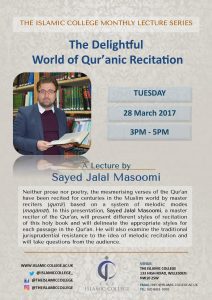
Neither prose nor poetry, the mesmerising verses of the Qur’an have been recited for centuries in the Muslim world by master reciters (qurrā’) based on a system of melodic modes (maqāmāt).
LIVE PUBLIC WEBINAR – Academic Writing for Islamic Studies
[vc_row][vc_column][vc_column_text]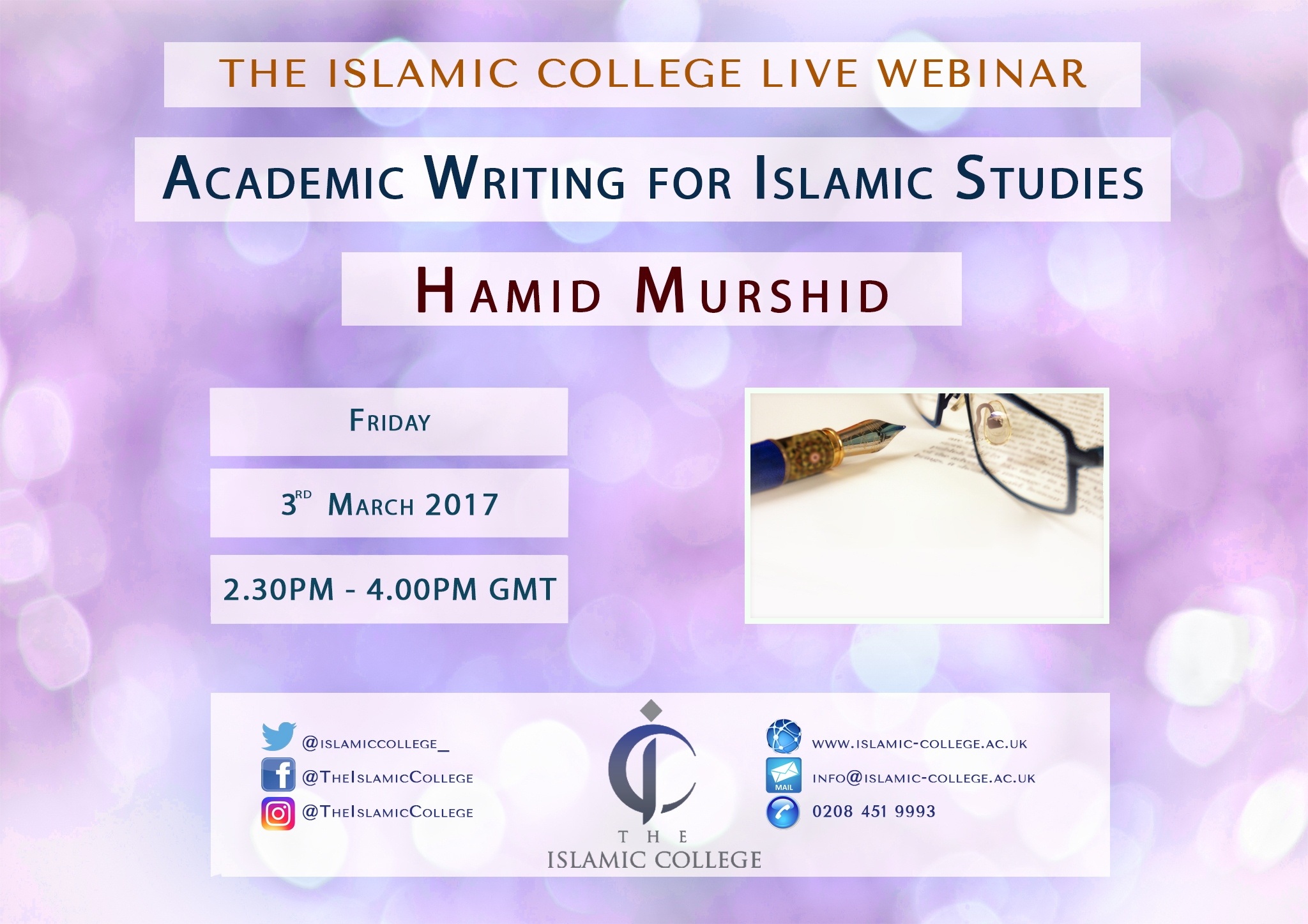
The webinar covers practical advice on how to improve one’s writing in general and formal academic writing in particular. The emphasis will be on clarity of presentation, critical reasoning, and sound argumentation. There will be a short review of a number of common logical fallacies which ought to be avoided in thoughts and arguments. The participants will be presented with samples of academic writings from the works of leading writers in the field of Islamic scholarship. Issues such as the choice of appropriate fonts for the Islamic Studies, the transliteration styles of two leading writing style manuals in Social Sciences and Islamic Studies, namely, IJMES and ICAS Press and effective application of transliteration conventions are among the topics to be discussed in the webinar.
Speaker? Hamid Murshid
When? Friday 3rd March
Time? 2.30 pm GMT
The online LINK to attend the webinar is:
https://ysu-na.youseeu.com/sync-activity/invite/6458/aa4575c9bffdf8def2312e3a88e78852?lti-scope=d2l-resource-syncmeeting-list
This link will be activated 15 minutes in advance of the webinar.
QUICK TIPS:
– Participants need to use a laptop or desktop computer. Tablets and mobile devices do not support all the features.
– Use headphones instead of speakers to prevent any voice echo’s
[/vc_column_text][/vc_column][/vc_row]
ICAS PRESS LATEST PUBLICATION – Introduction to Rijal Studies
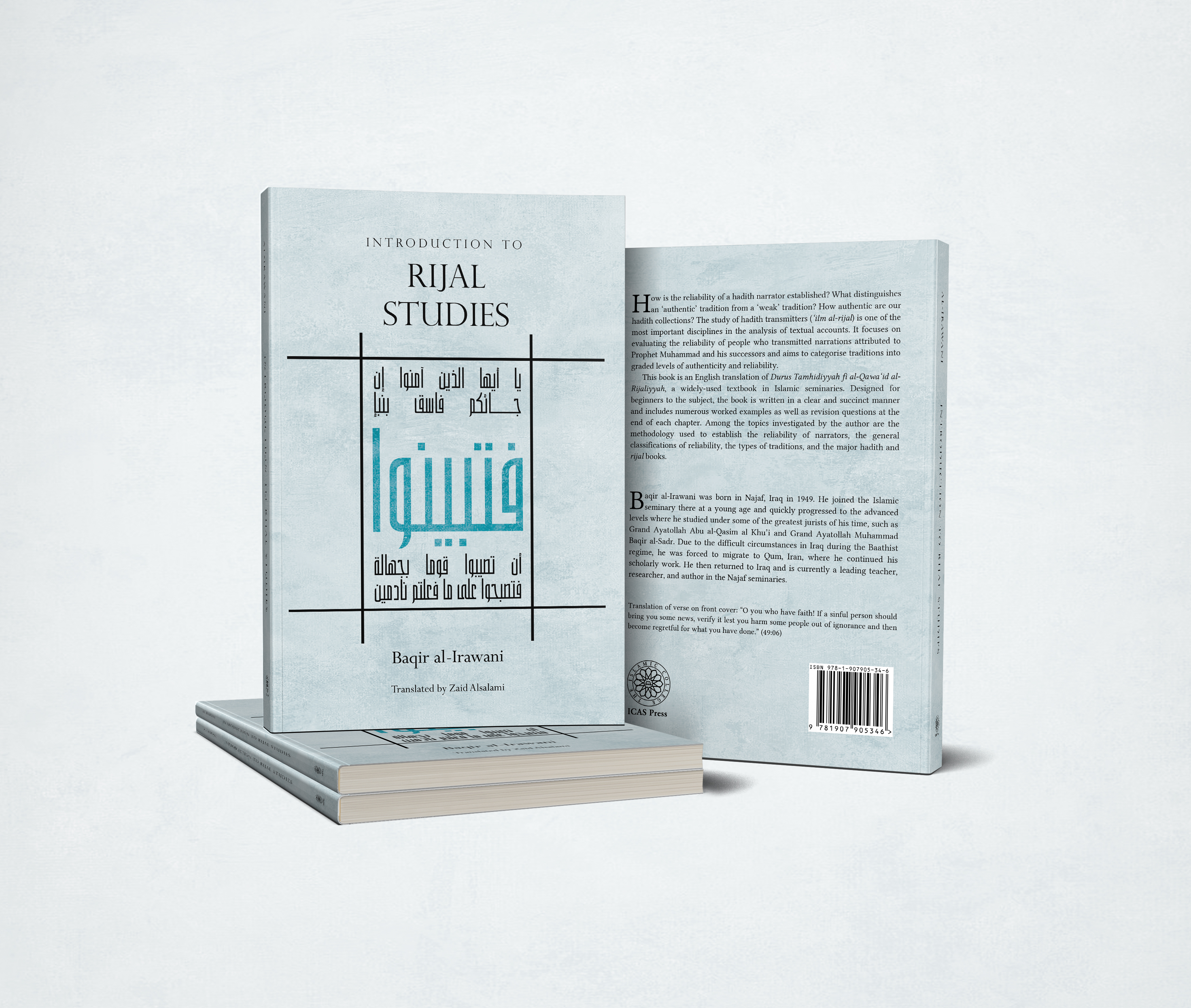
Introduction to Rijal Studies is an English translation of Durus Tamhidiyyah fi al-Qawa’id al-Rijaliyyah, a widely-used textbook in Islamic seminaries.
MONTHLY SEMINAR – The Influence of Persian Culture on Arabic Culture
Where does the word Firdaws come from? How was the Arab-Islamic view of history formed? Are the Arabian Nights actually Persian Nights?
NEW SHORT COURSE – Short Courses on Primary Sources of Islam: Nahj al-Balaghah Studies
[vc_row][vc_column][vc_column_text]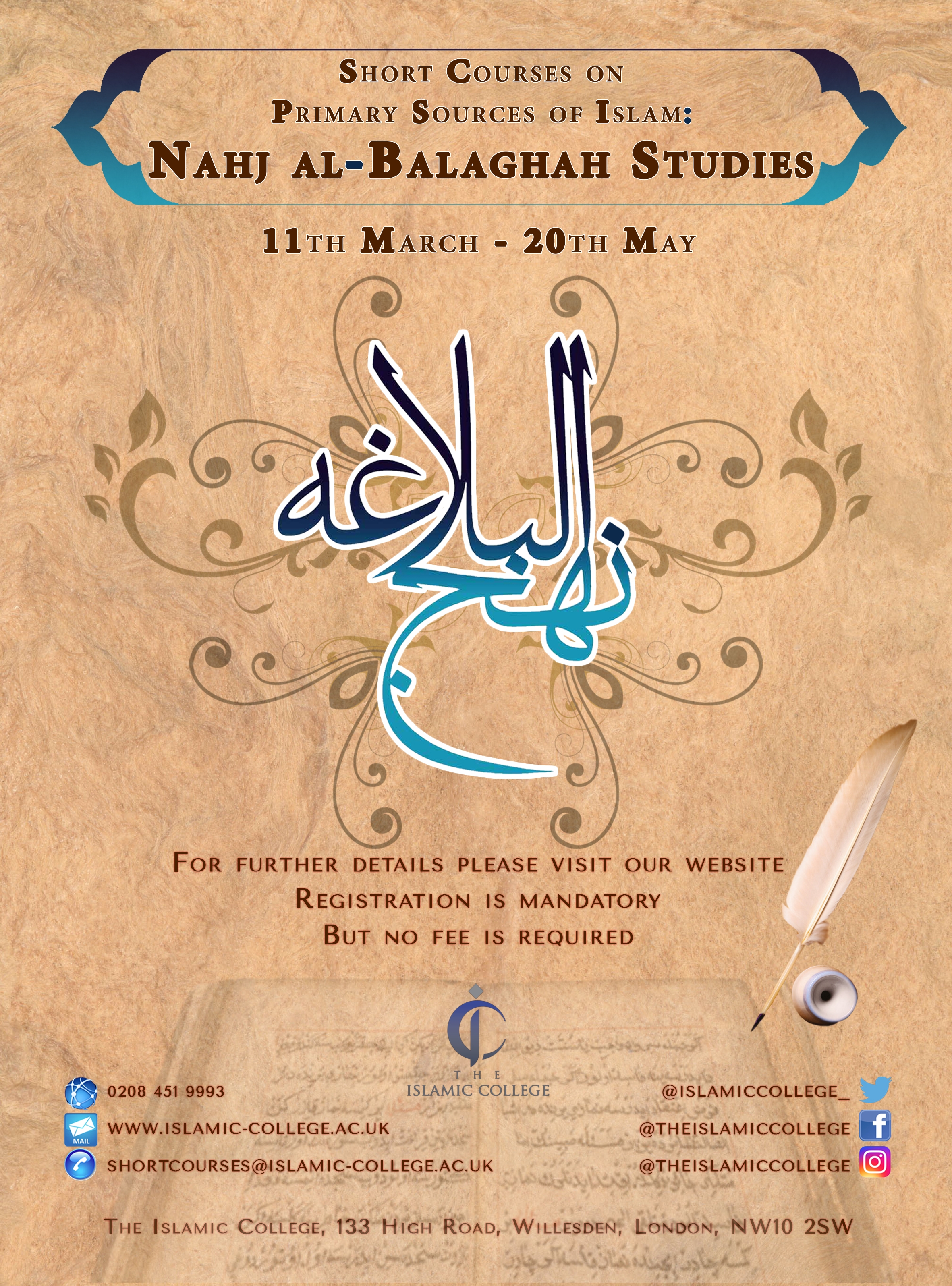
Nahj al-Balaghah Studies
This course is designed for students of all religions who are keen to learn about the primary sources of Islam. It covers various topics such as monotheism, the Hereafter, prophethood, Imamate, morality, wisdom, intellect, the Qur’an, the theory of justice, and the position of Imam Ali as discussed in Nahj al-Balaghah.
This course consists of 11 interactive sessions ending with Q & A.
This is a great opportunity to learn from the world-class scholars and experts on the life and thoughts of Imam Ali (as).
Registration is mandatory but no fee is required
To register:
Please complete this form or contact the Short Course Department by email: shortcourses@main.ictestweb.co.uk
[/vc_column_text][/vc_column][/vc_row]
Topics include:
Compilation and Authenticity of Nahj al-Balaghah
Shaykh Mohammad Saeed Bahmanpour
Saturday – 11th March 2017 – 15:00-18:00
The Ahl al-Bayt of the Prophet in Nahj al-Balaghah
Shaykh Mohammad Saeed Bahmanpour
Tuesday – 14th March 2017 – 18:00-20:00
Monotheistic Approach in Nahj al-Balaghah
Dr Isa Jahangir
Tuesdays – 21st & 28th March 2017 – 18:00-20:00
Spiritual Enhancement in Nahjul Balagha
Dr Syed Fadhil Al-Milani
Saturday – 22nd April 2017 – 15:00-17:00
Imam Ali’s Theory of Justice
Prof Ali Paya
Tuesday – 25th April 2017 – 18:30-20:00
The Image of The Qur’an in Nahj al-Balaghah
Dr Mohammad Ali Shomali
Thursday- 27th April 2017 – 18:30-20:00
Spiritual Mentoring(Tarbiyat) in Nahjul Balagha
Dr Mohammad Javad Zarean
Tuesday – 2nd May 2017 – 18:30-20:00
Imam Ali (as) in Nahj al-Balaghah
Maulana Maqbool Hussain Alvi
Tuesday – 9th May 2017 – 18:30-20:00
Prophethood in Nahj al-Balaghah
Dr Mohammad Ali Shomali
Thursday- 11th May 2017 – 18:30-20:00
Typology of Personalities in Nahj al-Balaghah
Maulana Maqbool Hussain Alvi
Saturday – 13th May 2017 – 15:00-18:00
Understanding the Qur’an in the Light of Nahj al-Balaghah
Shaykh Mohammed Ali Ismail
Tuesday – 16th May 2017 – 18:30-20:00
Nahj al-Balaghah: An Intellectual Touch
Dr Ahmad Jalali
Saturday – 20th May 2017 – 15:00-18:00
LIVE WEBINAR – The Relatively Just Society: Its Characteristics and Classes According to the Holy Qur’an
[vc_row][vc_column][vc_column_text]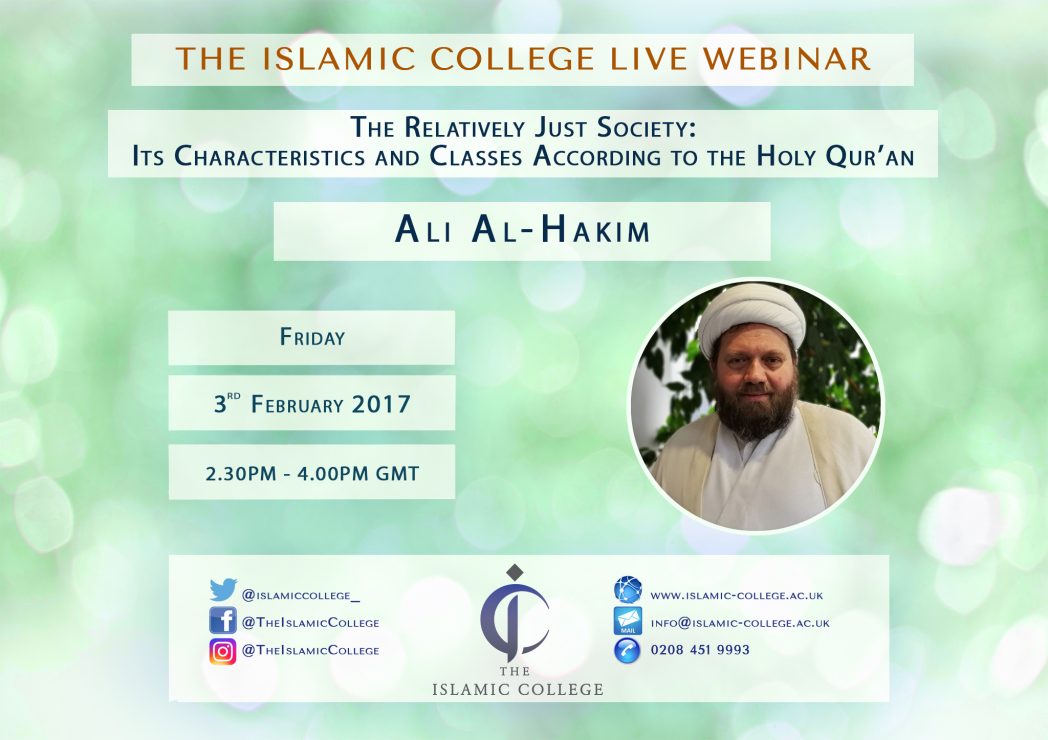
The human societies have existed since ancient times when many mini social units were formed, i.e. the family. Social scientists have examined the human society as a phenomenon and divided it into different types.
Such questions as leadership and justice remain as the most important topics relevant to the social reality. For a long time many thinkers, as well as Muslim laymen, held the assumption that as long as a society was led by a divinely perfected leader, the said society would be on the path to a bright future.
In this webinar we’ll discuss the existence of different classes within such a relatively just society, proving that it is far from strange to accept that this kind of society is not guaranteed glorious futures, unless the majority of their members have embraced –theoretically and practically- the divine ideals and values of their just leaders.
Speaker? Ali Al-Hakim
When? Friday 3rd February
Time? 2.30 pm GMT
The online LINK to attend the webinar is:
https://ysu-na.youseeu.com/sync-activity/invite/5423/e55022f91801a653dbd7402cc2773b3e?lti-scope=d2l-resource-syncmeeting-list
This link will be activated 15 minutes in advance of the webinar.
QUICK TIPS:
– Participants need to use a laptop or desktop computer. Tablets and mobile devices do not support all the features.
– Use headphones instead of speakers to prevent any voice echo’s
[/vc_column_text][/vc_column][/vc_row]
NEW SHORT COURSE – Introduction To Islam
[vc_row][vc_column][vc_column_text]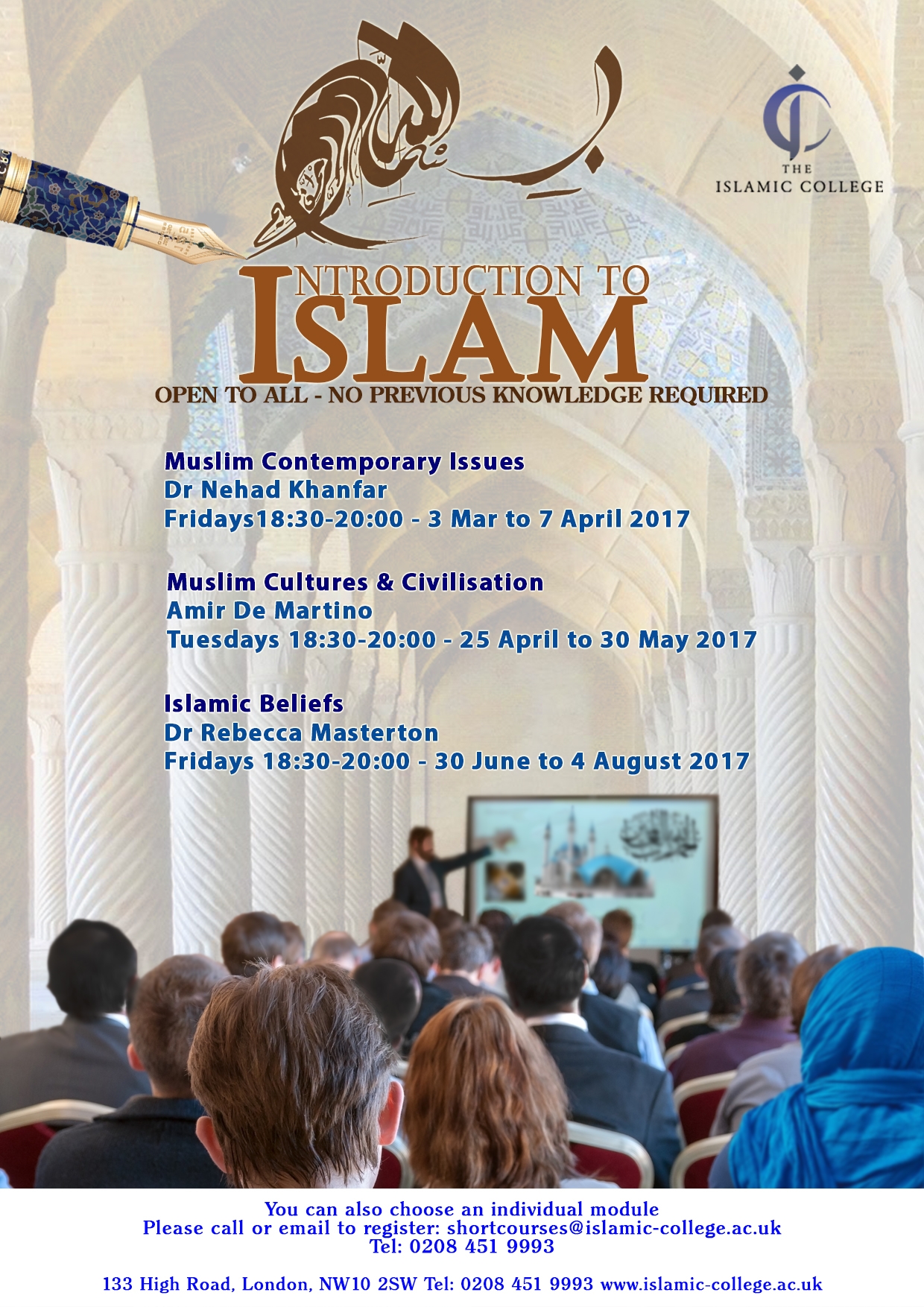
The “Introduction to Islam” is open to all and previous knowledge is not required. The Objective of the course is to introduce Islam, Islamic Beliefs, Traditions, Cultures and some of the Contemporary Issues the Muslim world have been facing.
Module 1:
Muslim Contemporary Issues
By Dr Nehad Khanfar
Fridays18:30-20:00 – 3 Mar to 7 April 2017
Module 2:
Muslim Cultures & Civilisation
By Amir De Martino
Tuesdays 18:30-20:00 – 25 April to 30 May 2017
Module 3:
Islamic Beliefs
By Dr Rebecca Masterton
Fridays 18:30-20:00 – 30 June to 4 August 2017
Registration is Open.
For more details please check the Introduction to Islam – Booklet
Registration is mandatory but no fee is required
To register:
Please complete this form or contact the Short Course Department by email: shortcourses@main.ictestweb.co.uk
LIVE WEBINAR – Law of Non-Contradiction in Modern Logical Context
[vc_row][vc_column][vc_column_text]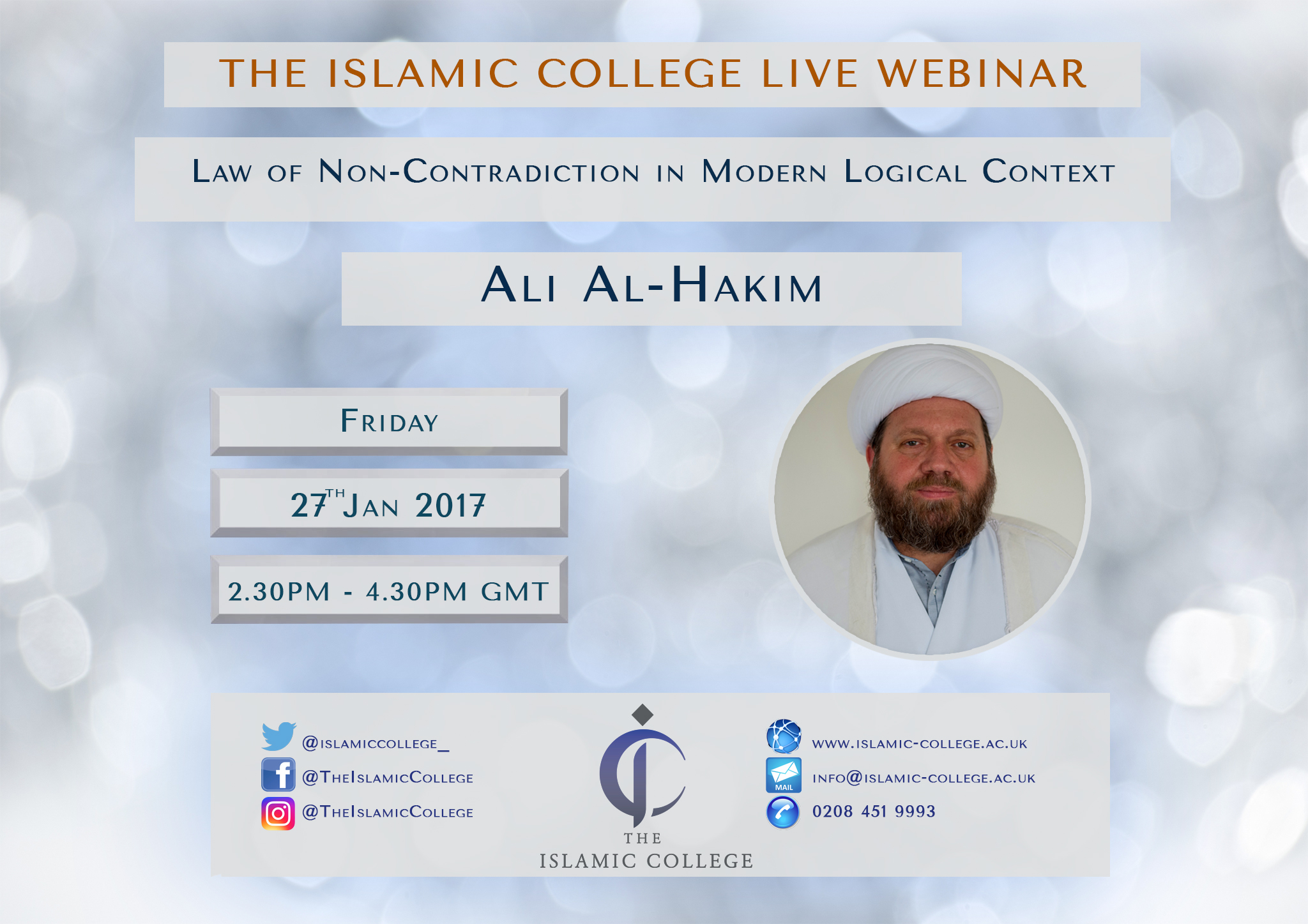
The law of Non-Contradiction (LNC), despite its importance and the claims to be a clear and axiomatic philosophical principle, but it’s -without a doubt- a very misunderstood and very vague for the majority of Human beings.
We will highlight the definition of the principle and elaborate on its importance and the main challenges that has been facing during the last century and this century.
The challenge from the previous century was presented by the Marxist epistemological thinkers, mainly by Karl Marx himself. He has claimed that it is incorrect to claim that this principle is axiomatic, as it can be argued against the impossibility! He mentioned about the conflict amongst the social classes as a perfect example of the possibility of the existence of contradiction.
The second challenge was presented during the last century. However it was modified and was presented accommodating most of the old and new famous spurious doubts about it. The modern opposite of the LNC, is indeed Dialetheism.
In this lecture, we will work on defending the principle of LNC and try to answer those spurious doubts and modern challenges.
Speaker? Ali Al-Hakim
When? Friday 27th January
Time? 2.30 pm GMT
The online LINK to attend the webinar is:
https://ysu-na.youseeu.com/sync-activity/invite/4883/9704518a94316093cc3e970ec16e70e5?lti-scope=d2l-resource-syncmeeting-list
This link will be activated 15 minutes in advance of the webinar.
QUICK TIPS:
– Participants need to use a laptop or desktop computer. Tablets and mobile devices do not support all the features.
– Use headphones instead of speakers to prevent any voice echo’s
[/vc_column_text][/vc_column][/vc_row]
LIVE WEBINAR – Democratic Factors in Islamic Tradition
[vc_row][vc_column][vc_column_text]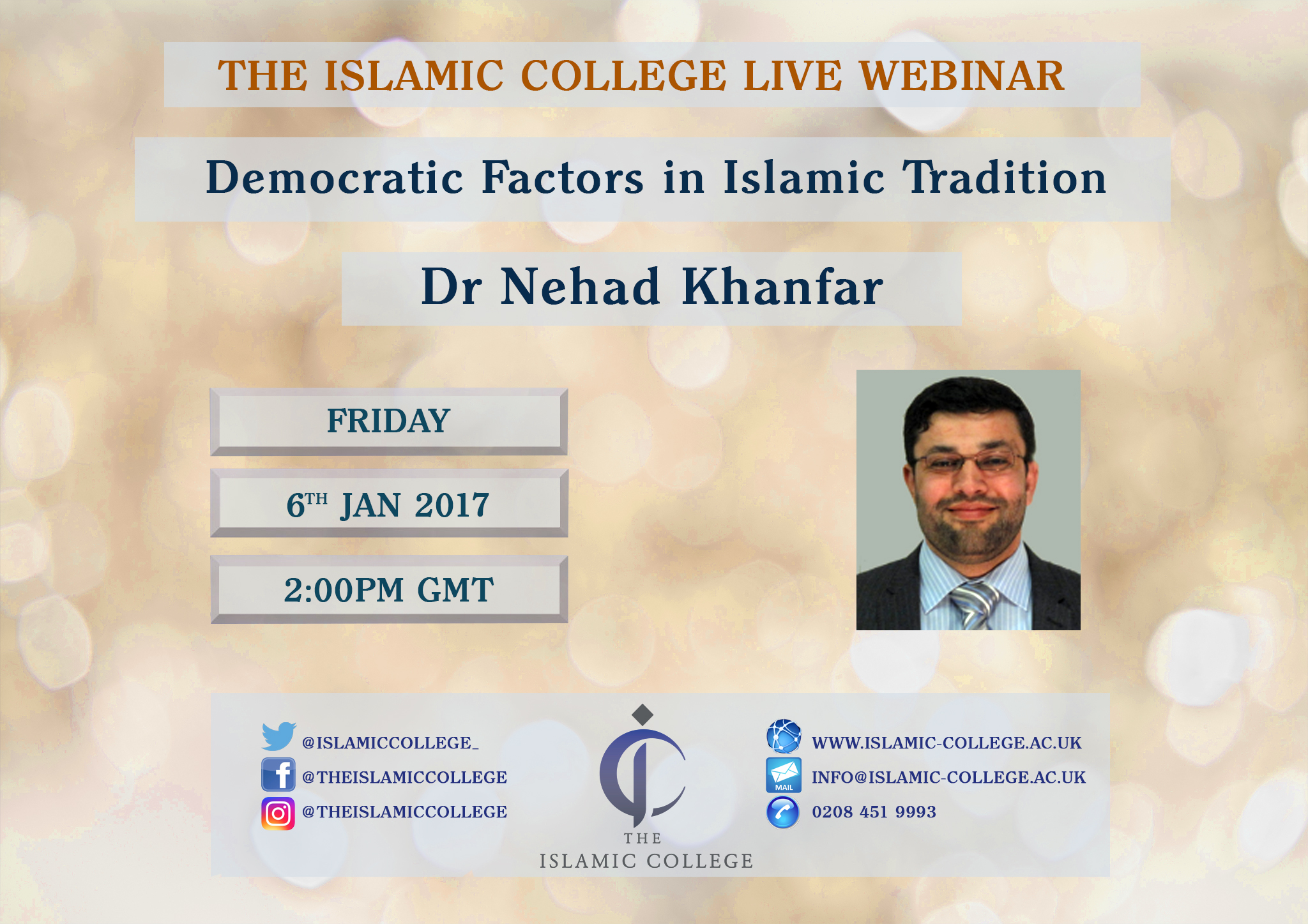
Many sceptics question Islam’s compatibility with democracy. In this webinar, we will discuss the context in which the Qur’an establishes and encourages democratic practices within Muslim and non-Muslim communities.
We will also shed light on the practice of Prophet Mohammad and examine the extent to which he engaged in democratic interaction during his social and political governance. Furthermore, we will tackle some misconceptions about democracy and Islam as expressed by Muslims and non-Muslims.
Speaker? Dr Nehad Khanfar
When? Friday 6th January
Time? 2.00 pm GMT
The online LINK to attend the webinar is:
https://ysu-na.youseeu.com/sync-activity/invite/3761/fa8917c02456227dd0fa71171f35839d?lti-scope=d2l-resource-syncmeeting-list
This link will be activated 15 minutes in advance of the webinar.
QUICK TIPS:
– Participants need to use a laptop or desktop computer. Tablets and mobile devices do not support all the features.
– Use headphones instead of speakers to prevent any voice echo’s
[/vc_column_text][/vc_column][/vc_row]
Qalandar Shi’ism in Safavid Iran
In our upcoming monthly lecture Dr Lloyd Ridgeon is Reader in Islamic Studies at the University of Glasgow. He has published extensively in Sufism, but his current project investigates flexible interpretations of shari’a law in modern Iran.